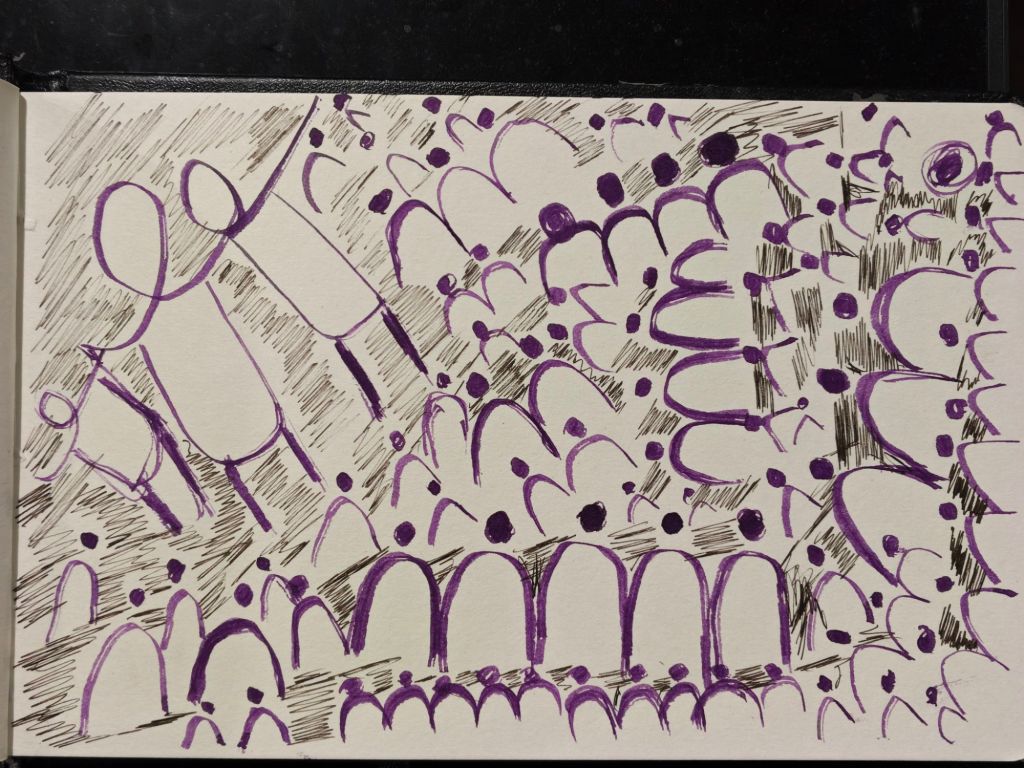
A crowd without faces, names, or destinations.
(more…)A crowd without faces, names, or destinations.
(more…)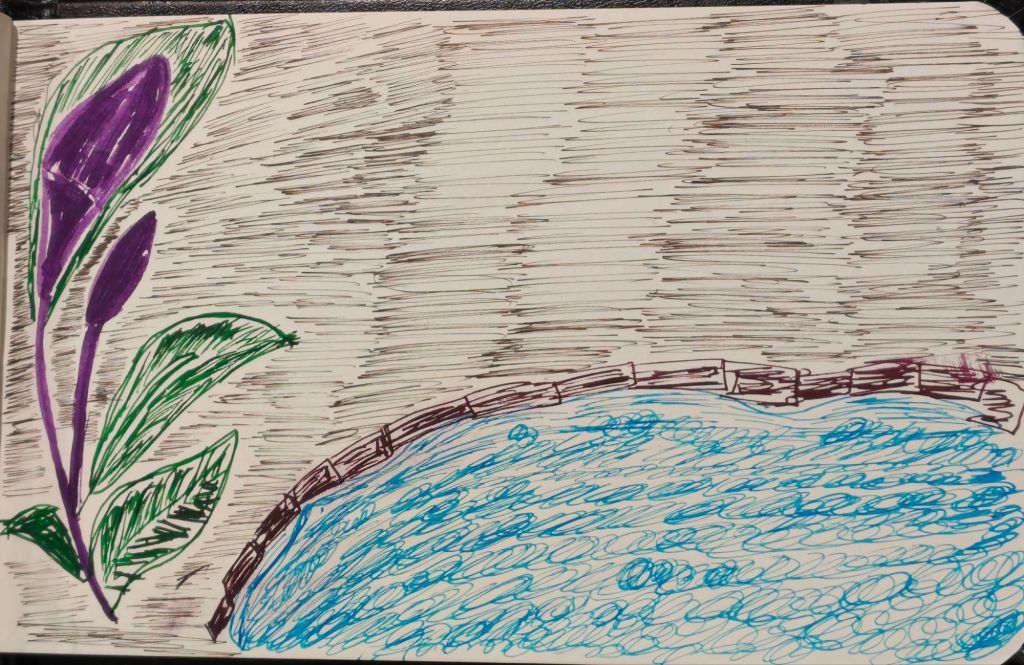
Nature was never waiting for us. It never needed human attention, ownership, or permission to exist. We needed nature. We named it, mapped it, fenced it, cultivated it, possessed it, and eventually populated it to the point where our presence began to overwhelm the very thing that sustained us. Yet beneath all that human noise, nature continues its own quiet existence.
A flower blooms beside the water without knowing whether anyone is watching. Perhaps that is the humbling truth: nature has a life of its own; it was never ours to begin with.
(more…)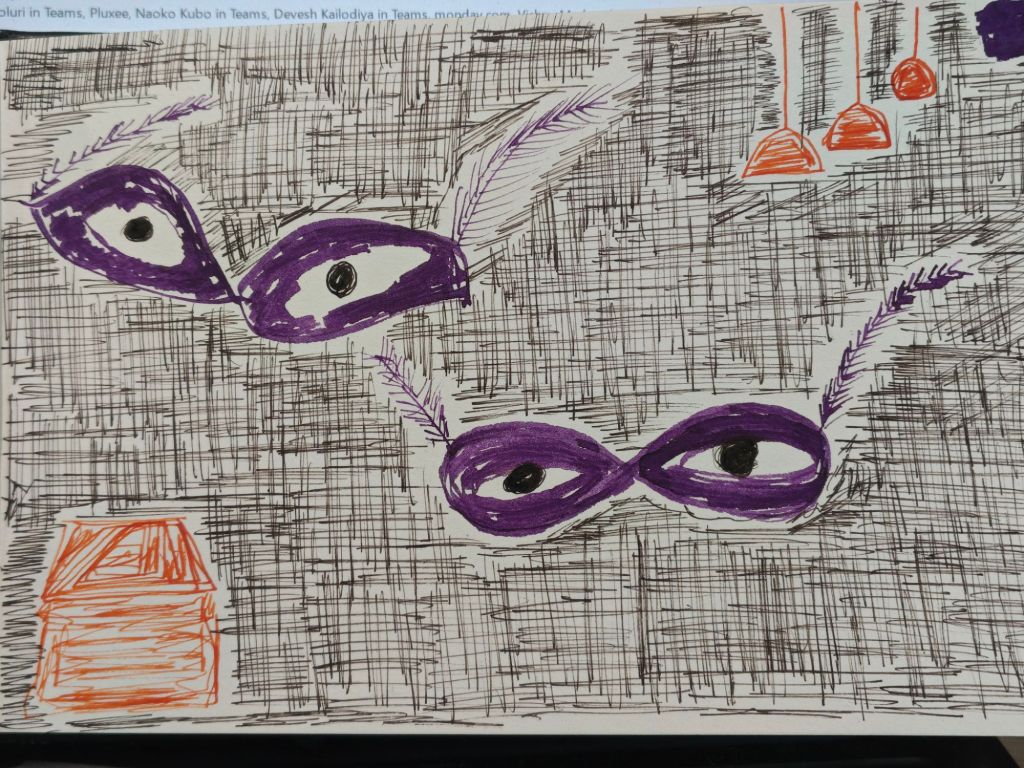
I’ve always been fascinated by secret societies and masquerade balls: The idea that a room full of people can conceal itself in plain sight. There is something wonderfully theatrical about everyone wearing a mask, identities becoming uncertain, and ordinary social rules giving way to something more clandestine.
The movie, Eyes Wide Shut is an obvious modern reference, but the image also comes from years of reading medieval and Renaissance historical fiction, where masked balls, secret gatherings, intrigue and whispered conspiracies seemed to exist just behind the visible world.
(more…)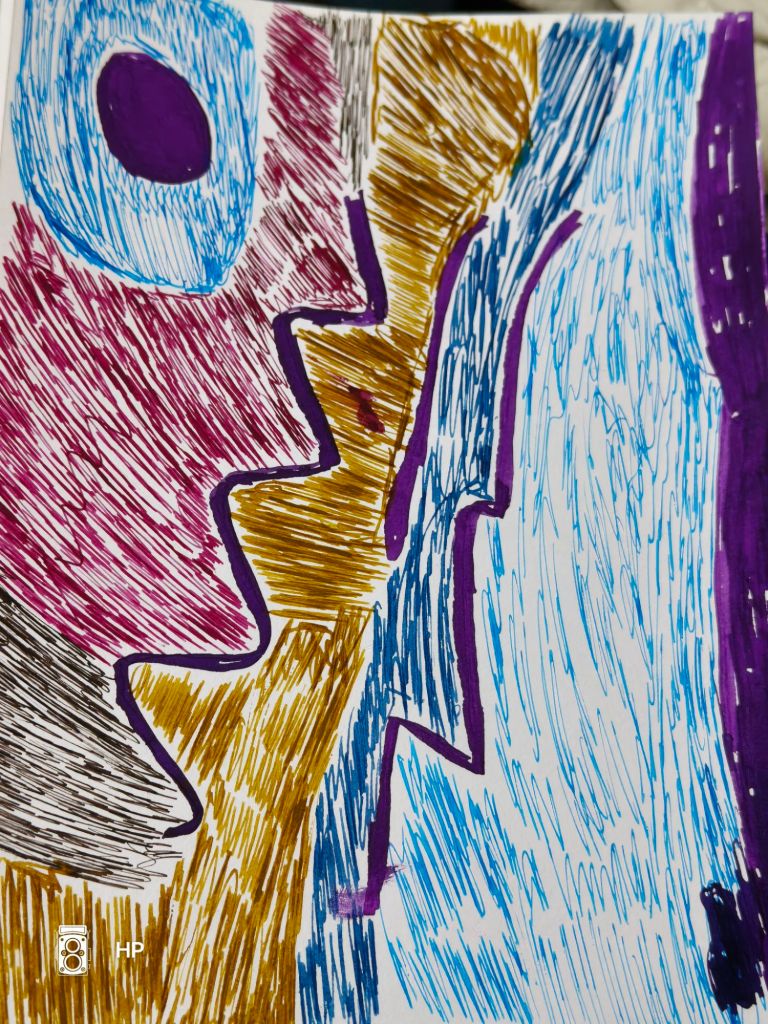
Inspired by Mackenna’s Gold, a movie I watched when I was around eight. It was probably the first—and perhaps the only—Hollywood movie I remember my uncles talking about back in those days. For a film to travel all the way into our little world in Tuni says something about how enormous its reach must have been. What stayed with me wasn’t so much the story as the landscape: the hills, the river winding through them, and above all, gold at its most dazzling, shining nuggets hidden somewhere in that vast country. As a child, that landscape seemed almost mythical. Looking back at it now, Eldorado is less a drawing of a place than a drawing of that childhood idea of where gold might be hiding.
(more…)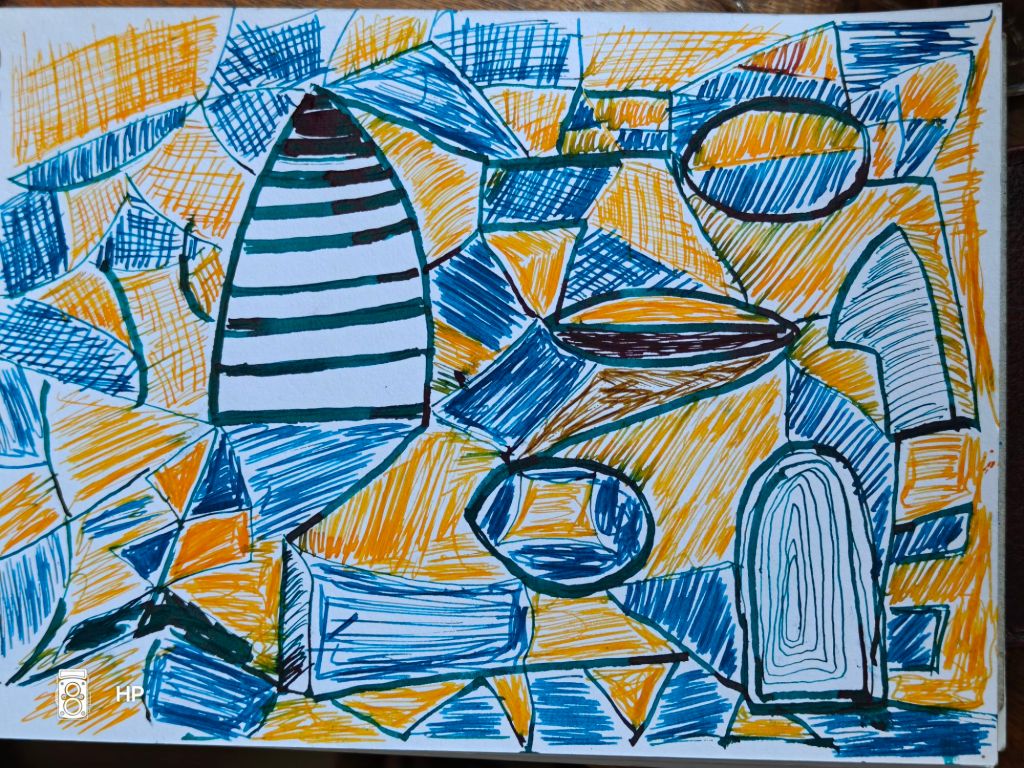
This is what happens when the imagination stops asking permission. A witch has apparently eaten a suspicious amount of passion fruit, washed it down with blueberry juice, and then erected her tent somewhere inside a fever dream.
This is visual logic of a psychedelic dream: vivid, fragmented, slightly absurd, and completely unconcerned with utility. There doesn’t have to be a meaning hiding underneath it. This is what I saw when I had magic mushrooms back in 2007
(more…)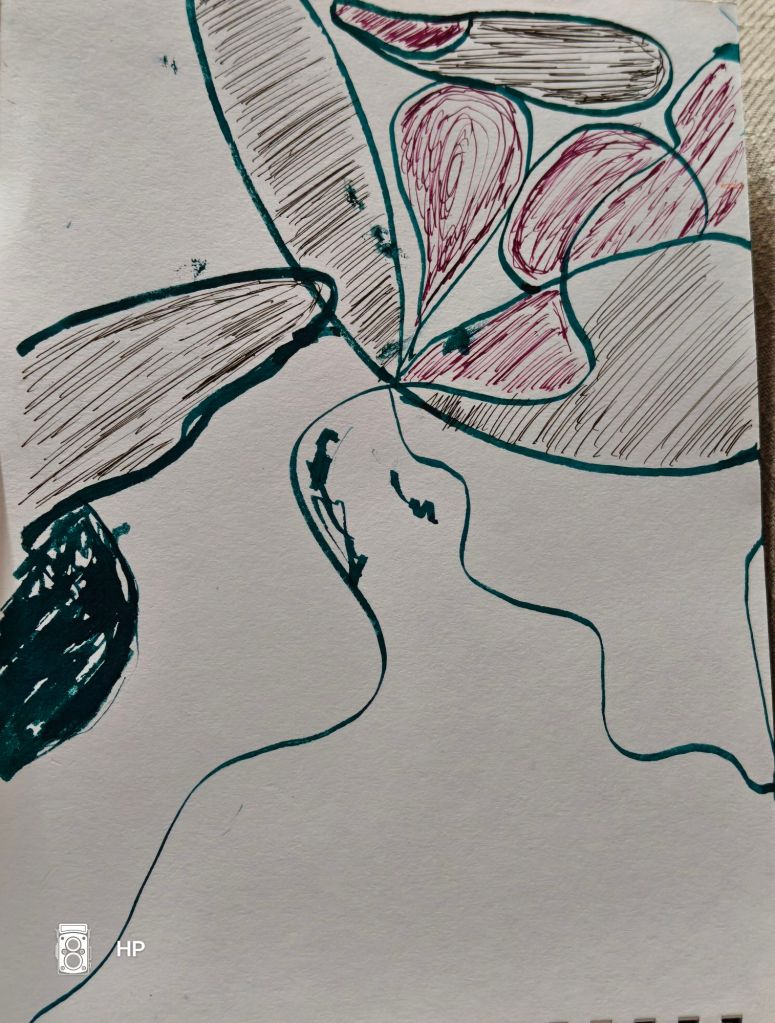
I arrived at the edge of something that seemed to have opened just for me. It was less a body than a flower unfolding in slow motion, its petals soft, secretive, impossibly close. I felt myself drawn toward it with the blind certainty of a moth finding a flame, or a bee discovering a flower after travelling miles through an empty summer.
There was no map, no instruction; only the strange gravity of two forms recognising one another. I wanted to disappear into that softness, to become part of the unfolding, until the distinction between flower and visitor, invitation and arrival, was no longer quite clear.
(more…)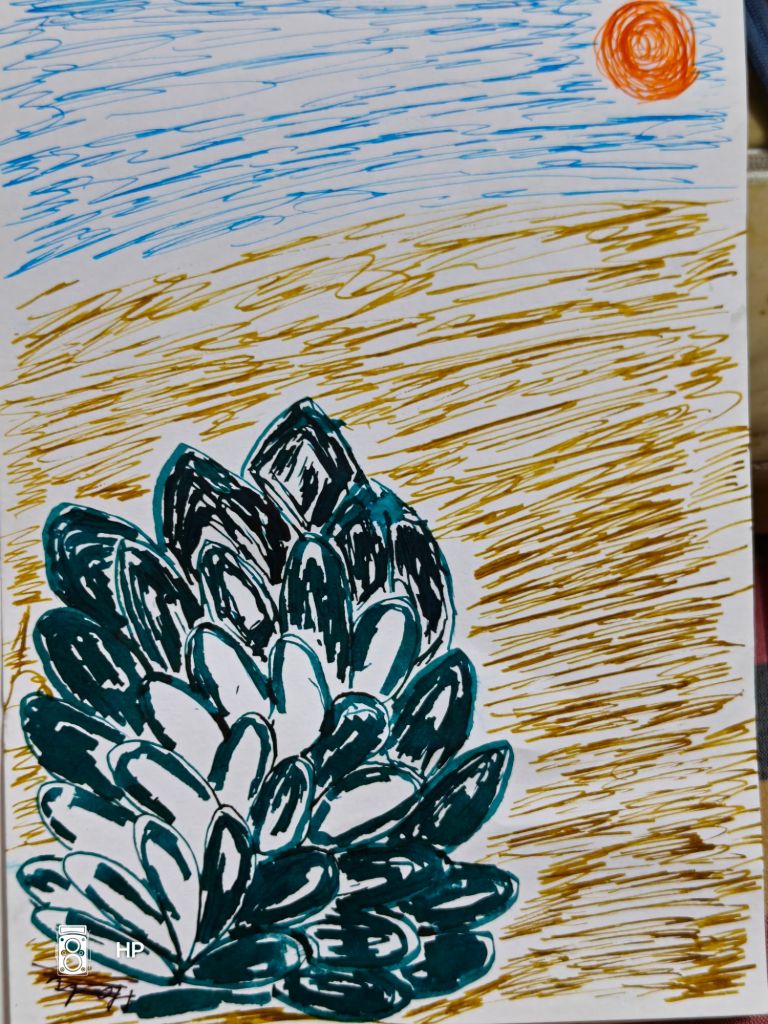
A resilient xerophyte rising from an imagined roadside landscape on the way to Omaha… blue-green against ochre earth, stark sun overhead. A small study in endurance, solitude, and the strange things one notices while travelling.
(more…)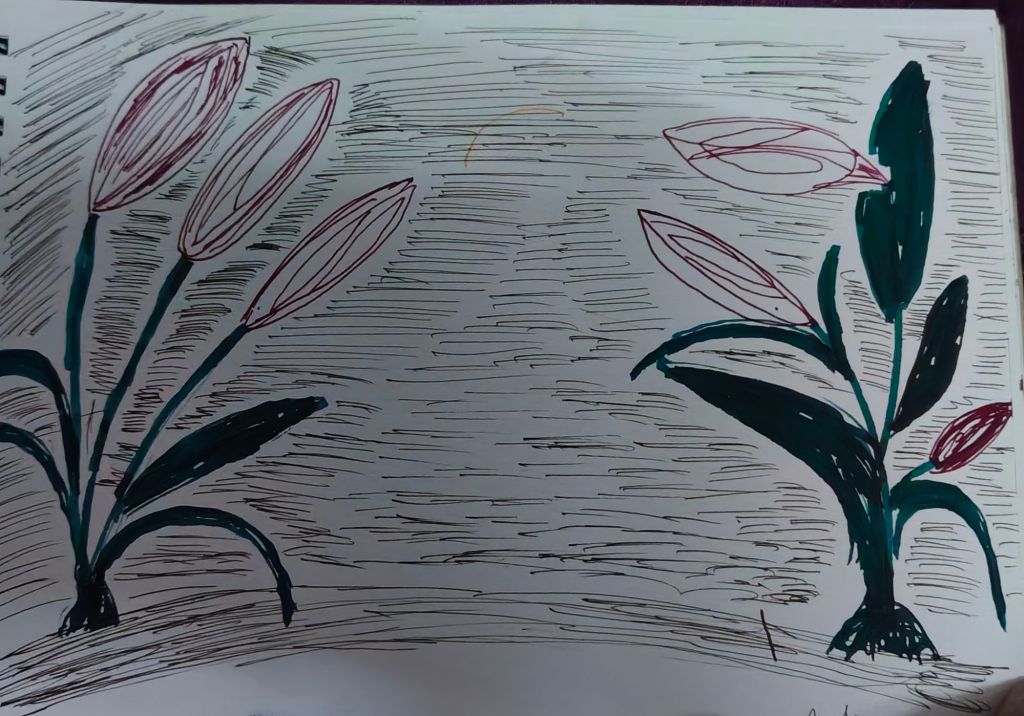
I was fascinated by orchids as a child. Perhaps it was the strange fact that they could grow high up on the branches of trees, or that they belonged to their own botanical family, Orchidaceae. I loved their flamboyant colours and the way their beauty seemed almost deliberate—using colour and form to attract pollinators rather than relying simply on fragrance.
There was also something wonderfully aristocratic about them; orchids always seemed to occupy a more elite corner of the botanical world. They were as beautiful to me as lilies, but somehow more delicate, exotic, and mysterious. That childhood fascination stayed somewhere in the back of my mind, and this is my attempt to put a little of it onto paper.
(more…)
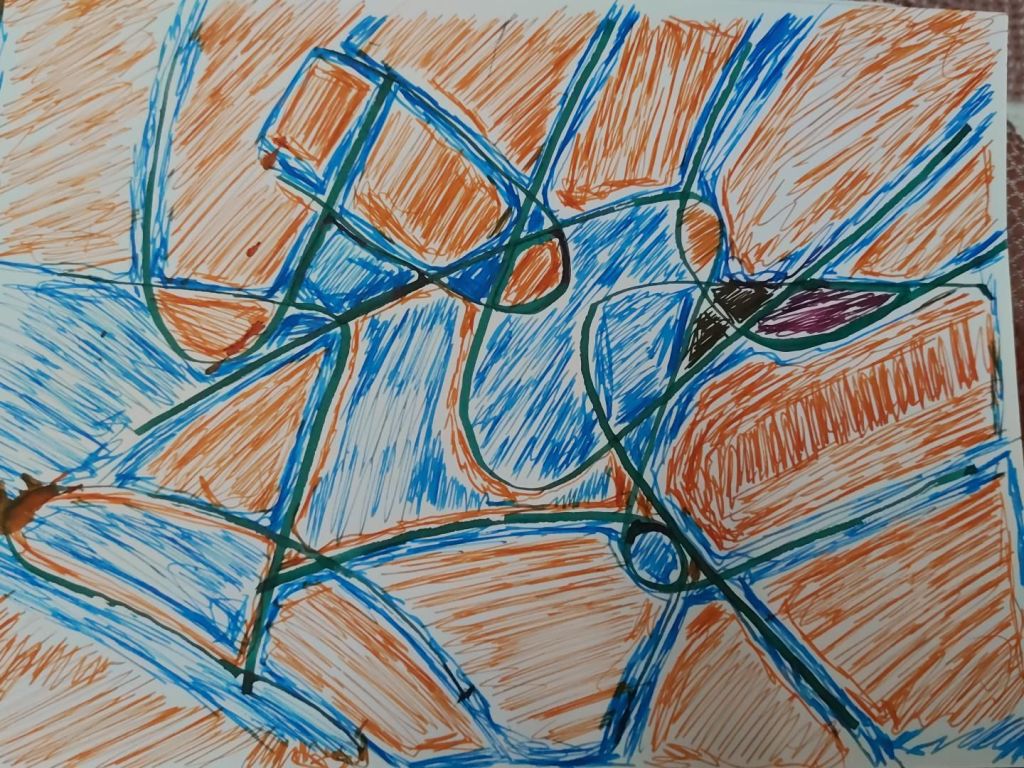
have always been fascinated by the meeting of opposing elements: volcanoes pouring their molten contents into rivers and seas, fire entering water, heat transforming something cold. That fascination somehow led me back to sulphur baths and hammams: Places where the earth’s heat becomes something almost ritualistic, something you immerse yourself in.
The blue and orange here are my attempt to capture that meeting: ice and fire, water and earth, cold and heat. They aren’t really opposites in this drawing; they seem to belong to the same landscape.
(more…)
