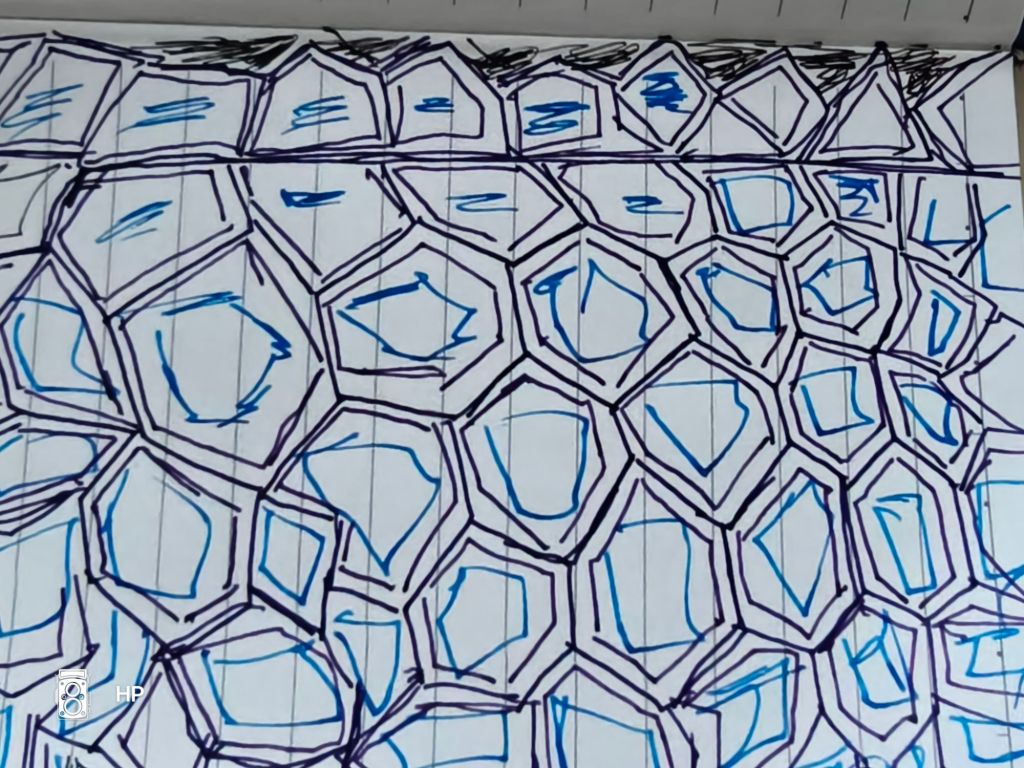
Human and other mammalian eyes generally rely on one or two image-forming eyes, with overlapping fields of view in many species contributing to binocular vision and depth perception. In insects and many other arthropods, the arrangement is radically different. A compound eye is an aggregation of numerous tiny optical units called ommatidia, each sampling light from a particular direction. Rather than looking at the world through one large peephole, the insect samples its surroundings through hundreds or thousands of these tiny windows, giving it a remarkably broad field of view. The result is not simply one photograph of the world, but a mosaic of information gathered from many directions at once. For an insect, this can be immensely useful: movement, approaching predators, potential prey, obstacles and other changes in its surroundings can be detected across a wide visual field.
Each ommatidium has its own small optical system, including a corneal lens and a group of photoreceptor cells whose light-sensitive structures form the rhabdom. Light entering the ommatidium is converted into signals that pass into the insect’s nervous system, where information from many ommatidia is integrated. In that sense, a compound eye is less like a single camera and more like a vast array of tiny sensors, each reporting what is happening in its own small portion of the visual field. The insect’s nervous system can then make sense of the changing pattern across this array. What fascinates me about the compound eye is that vision here seems less like looking through a single window and more like constructing an awareness of the world from thousands of simultaneous little observations.


Leave a Reply